


Ice cream looks simple in the freezer aisle, but making it at industrial scale is a sequence of tightly controlled steps. Each stage has its own equipment, and each one affects texture, safety and shelf life. Here is how the process runs and where our machinery fits in.
From milk to ice cream mix
Production starts with milk reception. Fresh milk is checked for quality before it enters the line, because the raw material sets the ceiling for the final product. The milk is then pasteurised to eliminate harmful bacteria and homogenised so the fat stays evenly dispersed.
Next, the mix is prepared. Milk, cream, sugar, stabilisers and flavourings are measured precisely and blended in mixing tanks. The blend is pasteurised a second time, then cooled and aged, usually for several hours at refrigerated temperature. Ageing lets proteins and stabilisers hydrate properly, which gives a smoother, more stable ice cream.
Freezing and churning
The aged mix enters the freezer, where it is churned while it freezes. This step does two jobs at once. It draws air into the mix, which gives ice cream its volume, and it forms the small ice crystals that give a creamy mouthfeel. Speed, pressure and temperature at this stage decide the final texture, which is why the freezer is the heart of the line.
Inclusions, packaging and hardening
Nuts, fruit pieces, chocolate chips and sauces are added at set points during freezing. Inclusion feeders dose the pieces evenly, and variegate pumps place ripple sauces without breaking the structure of the product. The ice cream is then filled into containers and moved to blast freezers, where it hardens quickly. Fast hardening keeps ice crystals small and protects quality during storage and distribution.
Machinery and Al Hariri Group’s role
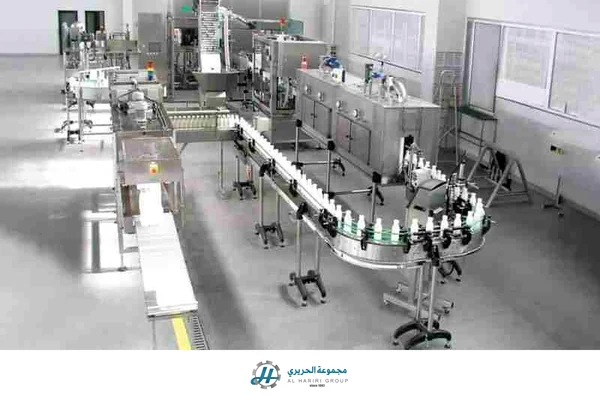
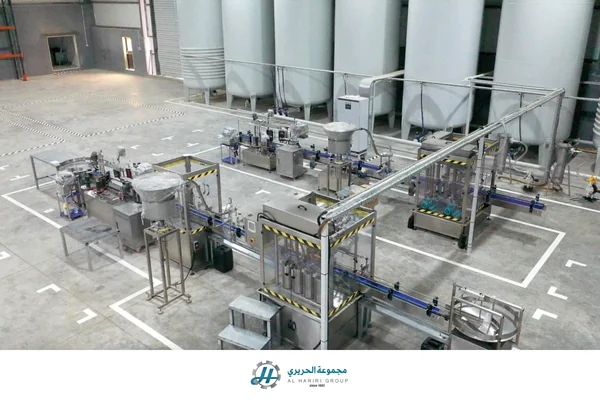
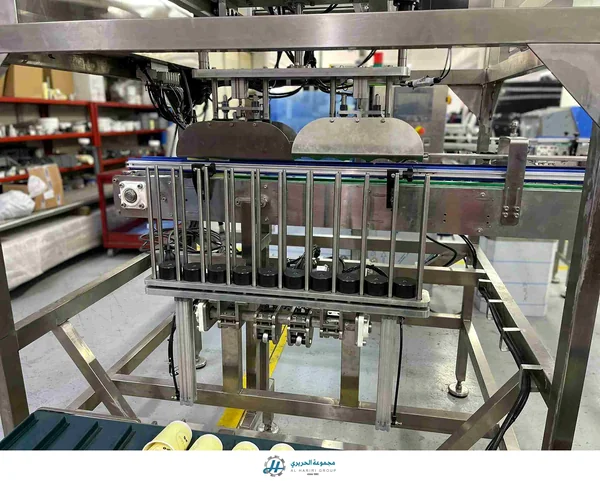
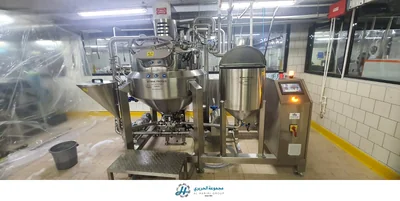
A typical ice cream line includes stainless steel mixing tanks and homogenisers, pasteurisers, ageing tanks, batch or continuous freezers, inclusion feeders, variegate pumps, filling machines and blast freezers. Al Hariri Group manufactures these machines and supplies turnkey ice cream factories, so the process from mixing to packing is designed as one system.
Our catalogue also covers batch ice cream machines and related equipment, which we can match to your target output.
Frequently Asked Questions
What is the first step in making industrial ice cream?
Milk reception and quality checking. The raw milk is tested before it enters the line, and then it is pasteurised and homogenised.
Why is ageing necessary?
Ageing gives proteins and stabilisers time to hydrate, which improves smoothness and stability. It is usually done at refrigerated temperature for several hours.
Does Al Hariri Group supply only machines or complete factories?
Both. We supply individual machines such as mixing tanks, pasteurisers and freezers, and we also deliver turnkey ice cream factories.
Blog Posts
Rotary Lobe Pumps in Turkey: A Practical Al Hariri Group Guide
Multihead Weighers in Turkey: A Selection Guide from Al Hariri Group
Honey Filling Machines: Options for Jars, Bottles and Sachets
Mayonnaise Production Lines: Machines, Process and Quality Control
Date Syrup Production Line: Machinery, Process and Plant Setup
Al Hariri Group Virtual Showroom: Explore Filling and Food Processing Machines Online
Recent Products
Stainless Steel Industrial Mixer for Paints and Chemicals
KRT 500 Front Unloading Mixer, AISI 304
Stainless Steel Chocolate Melting and Holding Tank
Fruit Juice Concentrate Plant, 1,500 to 12,000 LPH, LIONMAK
Food-Grade Sanitary Welded Stainless Steel Cross, 304 or 316L
CTR VAC 200 Vacuum Kuter for Large Salami and Sausage Factories
Tomato Paste Pasteurization Machine
Olive Oil Filling Machine and Bottling Line, LIONMAK
Manual Sorting Process Machine