


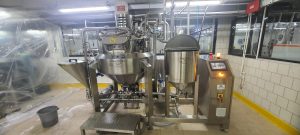


Cheese making looks artisanal, but in a factory it is a chain of precise steps. Milk is standardised, curd is formed, cut and cooked, the cheese is moulded and pressed, then salted and ripened. Each stage is set by time, temperature and machine settings. Here is how the process runs and where our equipment fits in.
Milk reception and standardisation
Production begins at milk reception, where fresh milk is collected and checked before it enters the line. The milk is then pasteurised to remove harmful bacteria while keeping its essential properties. Centrifugal separators split the milk into cream and skim milk, which lets the cheesemaker standardise fat content for each cheese type.
Curd making, cutting and cooking
The treated milk is inoculated with starter cultures and rennet, and it sets into curd. The curd is then cut into pieces of a set size. Cutting size controls how much whey the curd releases, so it directly affects moisture and texture. The curd is cooked and stirred in vats, which expels more whey and firms the curd for the next stage.
Moulding, pressing, brining and ripening
Curd is transferred into moulds, where presses squeeze out remaining whey and shape the cheese into blocks or wheels. Depending on the variety, the cheese is then immersed in brine or salted, which adds flavour and helps preservation. Finally, the cheese moves to ripening rooms, where controlled temperature and humidity allow flavour and texture to develop over time.
Machinery and Al Hariri Group’s role
A cheese line typically includes pasteurisers, centrifugal separators, curd cutters, cheese vats, presses and brining tanks. Al Hariri Group manufactures and exports this machinery and delivers turnkey cheese factories, covering the process from milk treatment to ageing.
When one supplier designs the whole chain, the handover between stages is planned in advance, which reduces losses and keeps output consistent.
Frequently Asked Questions
What is the first step in industrial cheese production?
Milk reception and quality checking. The milk is tested before it enters the line, then it is pasteurised and separated.
Why does curd size matter?
Curd size controls how much whey is released. Smaller pieces release more whey and produce a firmer cheese, while larger pieces keep more moisture.
Does Al Hariri Group supply cheese factories as well as machines?
Yes. We supply individual machines such as pasteurisers, separators and cheese vats, and we also deliver complete cheese factories designed around your product range.
Blog Posts
Honey Filling Machines: Options for Jars, Bottles and Sachets
Mayonnaise Production Lines: Machines, Process and Quality Control
Date Syrup Production Line: Machinery, Process and Plant Setup
Al Hariri Group Virtual Showroom: Explore Filling and Food Processing Machines Online
Al Hariri Group 2024 Products Catalogue: Filling, Packaging and Processing Range
Meat Processing Machines by Al Hariri Group: A Range Overview
Recent Products
Hummus Product Storage Tank
DKM-200 Mincer for Frozen Meat
Seamless Stainless Steel Tee, Sch 10S to 160
Three-Piece Full Port Stainless Steel Ball Valve
Automatic Filling Line Conveyor
Stainless Steel Bag Filter
Tapered Gear Coupling Union, 304 or 316 Stainless Steel
CTR 100 Kuter Meat Mixer for Salami and Sausage
316 Stainless Steel Swing Check Valve, DN25 PN16, Threaded