


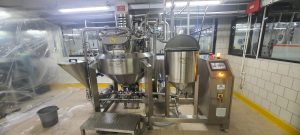


Hummus is one of the most widely sold chilled dips in both retail and foodservice. At higher volumes, manual methods reach their limits quickly, especially when texture, flavour and hygiene need to stay constant. This guide covers what a hummus line does, what to look for, and how we approach these projects.
Where manual production hits its limits
Traditional hummus is made from cooked chickpeas, tahini, lemon juice, garlic and salt. At small scale, a cook can adjust each batch by taste. In a factory, that approach does not hold. Hand-blending creates texture differences from batch to batch, labour becomes a bottleneck, and hygiene is harder to control when the product is handled manually.
What a hummus making machine does
A hummus making machine handles the core steps in a controlled sequence: dosing ingredients by weight, cooking or soaking the chickpeas, grinding them to a smooth paste, blending in tahini, lemon and seasoning, and discharging the batch to filling. Because each step runs on the same settings, the texture repeats from one batch to the next.
Features to check before you buy
Start with capacity. Work out how many kilograms you need per shift, then choose a machine with room to grow. Check that product-contact parts are food-grade stainless steel and that the machine can be stripped and cleaned quickly between flavours. Ask about controls that let you store recipes, and about safety features such as emergency stops and overload protection. Finally, look at after-sales support, including spare parts availability and response times.
Flavours, allergens and labelling
Flavour variety is part of hummus growth, with roasted red pepper, jalapeño and other styles now common. Each new flavour needs its own cleaning and changeover plan. Because tahini is made from sesame, sesame must be declared on the label in most markets. Check the rules for each target country before launch, since allergen and labelling requirements differ between the Gulf, the EU and Turkey.
Al Hariri Group and complete hummus lines
Al Hariri Group designs and supplies hummus production equipment as part of wider food processing projects. We can size a machine to your target output, or plan the full line from ingredient handling through to filling and packing. After reviewing your product list and volumes, we recommend the right configuration.
Frequently Asked Questions
Can a hummus machine make several flavours on one line?
Yes, with the right changeover plan. Machines with recipe storage and easy-to-clean parts make it practical to switch between flavours. Include the cleaning time for each changeover in your production schedule.
What raw materials does hummus need?
The core ingredients are chickpeas, tahini, lemon juice, garlic and salt. Tahini is made from sesame, so sesame must be declared on the label.
Do you supply complete production lines?
We supply individual machines and complete lines. Send us your target output, product range and available floor space, and we will prepare a proposal.
Blog Posts
Honey Filling Machines: Options for Jars, Bottles and Sachets
Mayonnaise Production Lines: Machines, Process and Quality Control
Date Syrup Production Line: Machinery, Process and Plant Setup
Al Hariri Group Virtual Showroom: Explore Filling and Food Processing Machines Online
Al Hariri Group 2024 Products Catalogue: Filling, Packaging and Processing Range
Meat Processing Machines by Al Hariri Group: A Range Overview
Recent Products
Male Liner-Linked Stainless Steel Reducer for Hygienic Lines
Welded Tapered Coupling, 304 or 316 Stainless Steel, DN 50
Chocolate Tempering Machine
Male-Liner-Linked Three-Way Sanitary Stainless Tee, 304 or 316L
TES-210 Meat and Bone Saw
TAN-300 Tantuni Meat Slicing Machine, AISI 304
Stainless Steel Pipe Cap, Sch 10S to 40S
Stainless Steel Concentric Reducer
Milk Cream Separator, LionMak