




Transferring cream, molasses or jam requires a pump matched to the product and the line. Rotary lobe pumps use positive displacement and can suit viscous or shear-sensitive food applications when the model and operating conditions are appropriate.
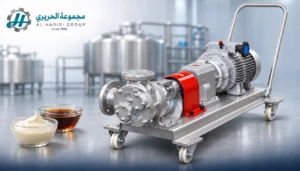
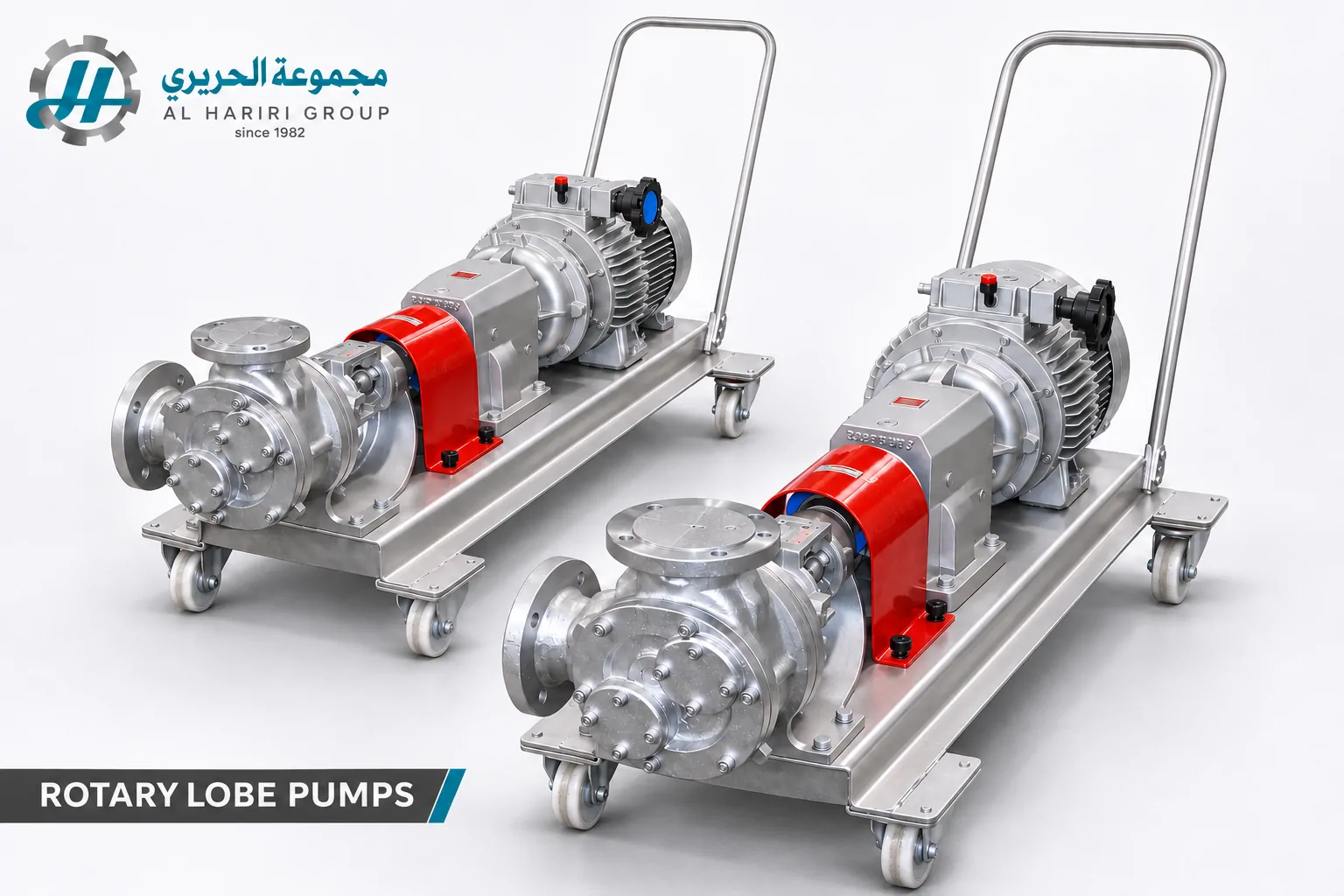
The image shows electric-motor-driven units with reduction gearboxes on wheeled stainless steel bases and push handles. This arrangement allows relocation between work points after disconnection and securing. The final configuration is specified around the factory’s needs.
How does a rotary lobe pump work?
Two lobed rotors turn in opposite directions inside the casing, synchronised by timing gears. Liquid travels in the spaces between the lobes and casing wall, from suction to discharge. Correct timing prevents contact between the lobes and between the lobes and casing.
Pump selection considers flow rate, pressure, viscosity, temperature and product sensitivity. Motor power alone is not enough to define a suitable configuration.
Suitable applications
Applications worth assessing include dairy products, cream, sugar syrup, molasses and jam. Products containing pieces require checks on particle size, internal clearances and rotational speed. Cosmetic and chemical applications also require material and seal compatibility with the transferred substance.
Configuration and model selection
- Pump type: positive-displacement rotary lobe pump.
- Drive shown: electric motor, reduction gearbox and coupling guard.
- Base shown: mobile stainless steel frame with wheels and push handle.
- Contact materials: AISI 316 or 316L stainless steel options for casing, cover and lobes, depending on model.
- Seals: selected around product, temperature and cleaning requirements.
- Flow, pressure and motor rating: defined in the technical proposal for the chosen model.
The image illustrates a mobile arrangement; it does not establish a specific model or rated capacity. Operating specifications are confirmed in the quotation after reviewing the application.
Why consider a lobe pump?
- A useful option to evaluate for viscous products requiring suitable speed selection.
- Can handle sensitive products or products with pieces within the chosen model’s operating limits.
- Offers material and sealing choices for different applications.
- A mobile configuration can be practical when the pump must serve different points in the factory.
Frequently asked questions
Are lobe pumps suitable for honey, jam and other viscous foods?
They can be considered after checking viscosity at operating temperature, flow and pressure. If the product contains pieces, their size and proportion must also be assessed.
Can the pump be used in a CIP system?
Clean-in-place suitability depends on the model, materials, seals and factory cleaning procedure. Confirm it in the technical specification rather than assuming it applies to every unit.
What should I send for a quotation?
Product name, viscosity and temperature, required flow, discharge pressure or pipe layout, particle size if relevant, connections, electrical supply and whether the base should be fixed or mobile.
Request a quotation
Tell us what you produce and the capacity you need. Contact Al Hariri Group for a configuration and quotation suited to your factory.
Plan the complete line
Read our practical guide to choosing a rotary lobe pump in Turkey.
Reviews
There are no reviews yet.